
Who Will Shape the World in the Next Decade? A Cambridge Expert Explains
By Samantha Palmer
About the Interviewee
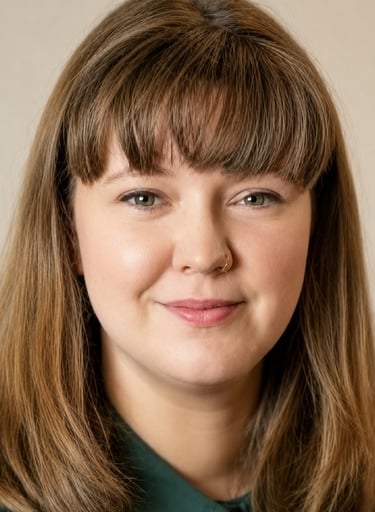
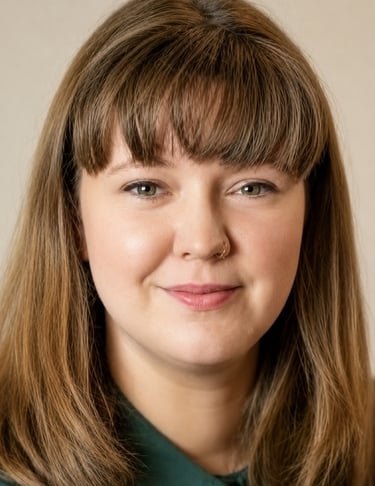
Claire is a Teaching Associate in Politics and International Studies at the University of Cambridge and a Visiting Fellow at King's College London. Her research focuses on international politics, digital governance, feminism, postcolonial theory, and India's political economy. She has previously worked at the University of York and King’s College London and is actively involved in research on global politics and social movements.
Interview
In this interview with Unfolding the World, Claire discusses whether China will overtake the United States, how she views Trump's foreign policy, the ethical challenges surrounding the UN Security Council, and why young people should become involved in international relations.
Which country do you believe is going to dominate the world stage within the next ten years?
" We are hearing a lot about the rise of China and the return to a more bipolar international order. Personally, I think ten years is too soon for anyone to challenge the USA's dominance. China's foreign policy does not seem to suggest that it is interested in assuming this role in the same way. In economic terms, the world is more interdependent than ever before. We are seeing this clearly now with the oil shortages following the US and Israeli attacks on Iran. "
Do you believe that the United Kingdom will form greater international relations with the USA due to Trump's America?
" I think the era of the "special relationship" has passed, but the UK is likely to continue trying to maintain close ties with the US. This relationship is much more one-sided than it was in previous decades: Trump does not seem interested in strong international cooperation unless the immediate benefit to the US is clear. Both Labour and Reform have indicated that they will seek close relations with Trump. This is out of step with other liberal Western democracies, such as Canada and the EU. "
What are your thoughts on United Nations peace keepers rights to diplomatic immunity and should the UN introduce ways to easily remove this depending on the individuals actions e.g. in crimes against humanity as seen in Liberia.
" This is not my area of expertise, but it is a very interesting and complex topic. I certainly think that there should be consequences for all such abuses of power, but I also believe that abuse is almost inevitable in situations where people have so much unchecked power over others. A feminist perspective on international relations would suggest that, for women and other vulnerable people, the absence of formal war does not necessarily mean peace. My colleague, Dr Ola Osman, is a specialist in Liberia, so you might also want to write to her. "
"Learn a language! This is really key for employability if you want to work abroad."
— Claire, University of Cambridge
Do you believe the permanent five members maintaining their veto powers is ethical within the 21st century?
" If you mean the UN Security Council, then my view is certainly that it is not. You might already have seen that my work is heavily influenced by postcolonial theory, meaning that I understand our current world as being shaped by the legacies of colonialism in the twentieth century. The UN Security Council veto gives old imperial powers (Russia, France, and the UK) and newer imperial powers (the US and China) disproportionate influence over other countries. I do not consider this to be ethical because all five countries have used their power in ways that have harmed ordinary people around the world (e.g. apartheid in South Africa, the genocide of Palestinians, chemical attacks in Syria, and the invasion of Ukraine). "
Thank you for reading! We'd like to thank Claire for taking the time to answer our questions and share her expertise with the Unfolding the World community.
Finally, what are some ways that young people can get involved within international relations?
" If you want to pursue a career in International Relations (IR), you should work towards studying a relevant subject at university, such as Law, International Development, Politics and International Relations, or History. At university, you will have plenty of time to think about how you might want to specialise. Also, learn a language! This is essential for your employability if you want to work abroad.
If you want to make a difference beyond your own career, I also think that getting involved in local politics is important: every global issue is local somewhere. For example, you might learn about politics in other parts of the world through local solidarity campaigns or by meeting people who have migrated to the UK from other countries through community groups. "
Interview by Samantha Palmer
Edited & Published by Lucía Lobato
© 2026. Unfolding The World. All rights reserved.
UNFOLDING THE WORLD
Because the world is complicated,
But understanding It shouldn´t be.

