The Radicalization Trap: How Ordinary Beliefs Quietly Turn Into Extremism
By Emilio Padrón

Modern societies are built through the coming together of people who share ideas, religious beliefs, political ideals, values, or common goals. However, these same differences in ways of thinking can also lead to conflict, division, and confrontation when respect and tolerance are lost.
To understand one of today's most significant challenges, we must first understand what radicalization and extremism are. Radicalization is the process through which a person adopts increasingly extreme ideas, eventually coming to justify intolerance, violence, or even acts of terrorism in order to defend those beliefs. Extremism, on the other hand, is the adoption of an absolute and intolerant attitude toward any differing viewpoint. In some cases, this can develop into violent extremism, where violence is used to impose an ideology.
Examples include terrorist groups such as Al Shabaab, Al Qaeda, the Islamic State (ISIS), and Hamas, which demonstrate how political or religious extremism can have a profound and damaging impact on society.
Throughout history, there have also been wars and conflicts driven by ideological or religious differences, including the Korean War, the Vietnam War, the Spanish Civil War, the Russian Revolution, the Cristero War, the Crusades, and the Cold War, the latter being characterized by the ideological confrontation between capitalism and communism.
Why Are So Many Young People Falling Into Extremism?
To answer this question, we must first examine why some people take their beliefs to the extreme and why this phenomenon appears to be occurring more frequently among younger generations.
HOW YOUR FEED IS QUIETLY RADICALIZING YOU
Social media has become an essential part of everyday life. Today, around 75% of the world's population owns a smartphone, and most people use at least one social media platform. These platforms provide a constant stream of content and instant entertainment, which explains why they have become part of our daily routines.
However, problems arise when algorithms prioritize political or religious content that is presented from only one perspective. In many cases, they highlight a single point of view while leaving out important information or alternative opinions.
This particularly affects young people, who make up a large proportion of social media users. By constantly receiving quick information without comparing it with other reliable sources, they may be more likely to adopt radical or poorly informed views on political, religious, or social issues.


CRITICAL THINKING
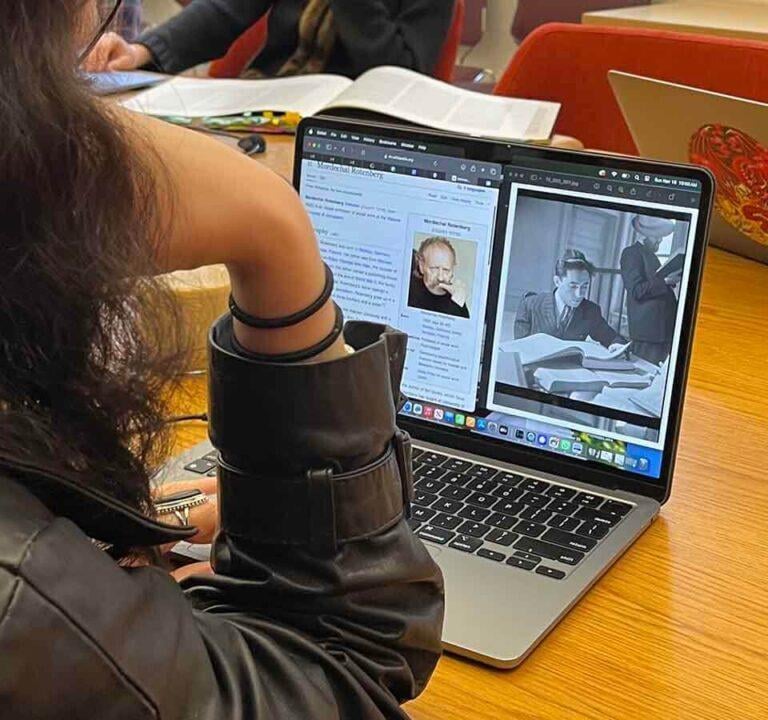
Another key factor is critical thinking. Nowadays, information is available to everyone, but so is misinformation. Many people accept the first version of a story without researching other sources or questioning what they see.
As a result, people can become trapped in "digital echo chambers," where they only consume content that confirms their existing beliefs. This reinforces polarization and makes radicalization more likely.
For this reason, developing critical thinking skills is essential. It allows people to evaluate information carefully, consider different perspectives, and form their own opinions based on evidence.
CONTENT CREATORS AND THEIR INFUENCE ON YOUNG PEOPLE
Content creators have a significant influence on young people because of the amount of time they spend on platforms such as TikTok, YouTube, Instagram, and X. For many teenagers, influencers are not only a source of entertainment but also role models who shape the way they think and interpret the world.
This influence can be positive when it promotes reliable information and constructive values. However, it can also be harmful when it spreads misinformation, extreme opinions, or messages that encourage conflict and division.
For this reason, it is important for users to develop the habit of verifying the information they consume instead of automatically accepting everything they see online.
EDUCATION AT HOME
Family education also plays a fundamental role in shaping a person's beliefs. Many families pass on positive values such as respect, solidarity, and empathy through religion or their own convictions.
The problem arises when these beliefs are taught as absolute truths, without allowing children to explore other perspectives or develop independent judgment.
When a child grows up in an environment where any different idea is rejected, they may develop a narrow view of the world and become less willing to engage in dialogue. This does not mean that religion itself leads to extremism; rather, a lack of tolerance and critical thinking can encourage more radical attitudes.
One example is the situation in Afghanistan, where groups with extremist interpretations of religion have imposed severe social restrictions and limited various freedoms. This case illustrates how an ideology taken to the extreme can profoundly transform the organization of a society.
Having examined these factors, we can now explore the difference between holding strong convictions and becoming an extremist.


Strong Beliefs vs. Extremism: Where's the Line?
Having strong convictions or acting according to an ideology is not inherently negative. Everyone has the right to practice a religion, support a political position, or defend certain values. The problem arises when those beliefs no longer allow room for dialogue, respect, or critical thinking.
To better understand this distinction, let us examine the following aspects:
TOLERANCE
A person with strong convictions can defend their ideas confidently and try to persuade others through reasoned arguments while still respecting other people's right to think differently. Tolerance does not mean agreeing with every opinion; rather, it means recognizing that, in a diverse society, there are different ways of understanding the same issue.
By contrast, an extremist believes that their position is the only correct one and views any opposing opinion as a threat. This attitude encourages hostility, discrimination, and even violence, making peaceful coexistence more difficult and increasing social polarization.
OPENNESS TO DIALOGUE
People with extremist views often reject any ideas that differ from their own because they believe there is only one valid truth. As a result, dialogue is no longer seen as an opportunity to exchange ideas but instead becomes a confrontation.
In contrast, someone with strong convictions can defend their beliefs while also listening respectfully to other viewpoints, even if they ultimately do not change their opinion.
CRITICAL THINKING
Critical thinking enables people to question information, consult different sources, and develop their own informed opinions. It also makes it possible to recognize mistakes within the group or ideology with which a person identifies.
On the other hand, an extremist tends to accept only information that confirms their beliefs while rejecting any evidence that contradicts them. This attitude makes people more vulnerable to manipulation, misinformation, and radicalization.
WHEN WORDS TURN INTO WEAPONS
People can defend their ideas through reasoned arguments, public debate, or political participation without resorting to violence.
However, when an ideology becomes extremist, some individuals begin to justify threats, discrimination, or acts of violence in order to impose their beliefs. Throughout history, many conflicts and terrorist attacks have occurred when extremist groups attempted to enforce their ideas by force.


PERSONAL IDENTITY
Beliefs, values, and ideologies are an important part of a person's identity and help shape the way they understand the world.
The problem arises when a person's entire identity revolves around a single belief or ideology. In these cases, any criticism of that belief is perceived as a personal attack, encouraging an "us versus them" mentality that is characteristic of many extremist movements.
POLITICAL IDEAS
In a democracy, it is natural for people to hold different opinions about the economy, education, public safety, or social rights.
Political extremism emerges when people with different opinions are no longer viewed as fellow citizens with another perspective but instead as enemies. This increases polarization and makes it more difficult to find common solutions, replacing dialogue with confrontation.
With these distinctions in mind, we can now examine the actions that can help achieve a balance between strong convictions, tolerance, and critical thinking.
The Secret to Disagreeing Without Destroying Each Other
After examining the causes of radicalization and the differences between holding strong convictions and becoming an extremist, an important question arises: how can we prevent radicalization and promote a healthier and more inclusive society?
In my view, the answer lies in strengthening tolerance, critical thinking, and respect for those who hold different opinions.


It Starts With Us
None of this changes overnight through policy or platform rules alone. It starts with small, daily choices: questioning a headline before sharing it, listening to someone we disagree with instead of muting them, and remembering that respect for others is not the same as agreeing with them.
But individual effort only goes so far. Families, schools, content creators, and media outlets all shape the environment young people grow up in — and all share responsibility for keeping it open rather than closed. When those pieces work together, dialogue stays possible and radicalization loses ground.
Throughout this article, we have explored what radicalization is, its main causes, its impact on society, and the differences between holding strong convictions and adopting extremist views.
Beliefs, values, and ideologies are an important part of people's identities and are not inherently problematic. The real danger arises when these ideas are treated as absolute truths that leave no room for dialogue, tolerance, or critical thinking.
We also examined how factors such as social media, misinformation, content creators, education, and the family environment can influence the formation of our opinions in both positive and negative ways.
In my opinion, the best way to combat radicalization is not to eliminate our differences but to learn how to live with them. Defending our own beliefs is a fundamental right, but so is respecting the beliefs of others.
Author: Emilio Padrón
Editor & Publisher: Lucía Lobato
I encourage you, as readers, to learn about different cultures, religions, ideologies, and ways of thinking, making an effort to understand them before judging them. Just as I encourage you to stay informed, I also invite you to share that curiosity with those around you: promote critical thinking, question the information you consume, and avoid accepting a single version of events without examining other perspectives.
We live in an age where information spreads faster than ever before, but so do misinformation and polarization. For this reason, it is our responsibility to investigate, compare information from different sources, and build our opinions on evidence and careful reflection rather than relying solely on what we see on social media or hear from others.
Only through respect, dialogue, and a willingness to learn from those who think differently can we build a society that is less polarized and more united. Defending our own convictions should never mean rejecting the opportunity to listen, understand, or learn from others, because diversity of thought is one of the greatest strengths of any democratic society.
In an increasingly polarized world, critical thinking, dialogue, and tolerance are among the most important tools for strengthening social cohesion and building a more united society—one in which our differences become opportunities to learn rather than reasons for division.


© 2026. Unfolding The World. All rights reserved.
Understanding the World, One Story at a Time.
About Us
Our Team
QUICK LINKS