The Cold War
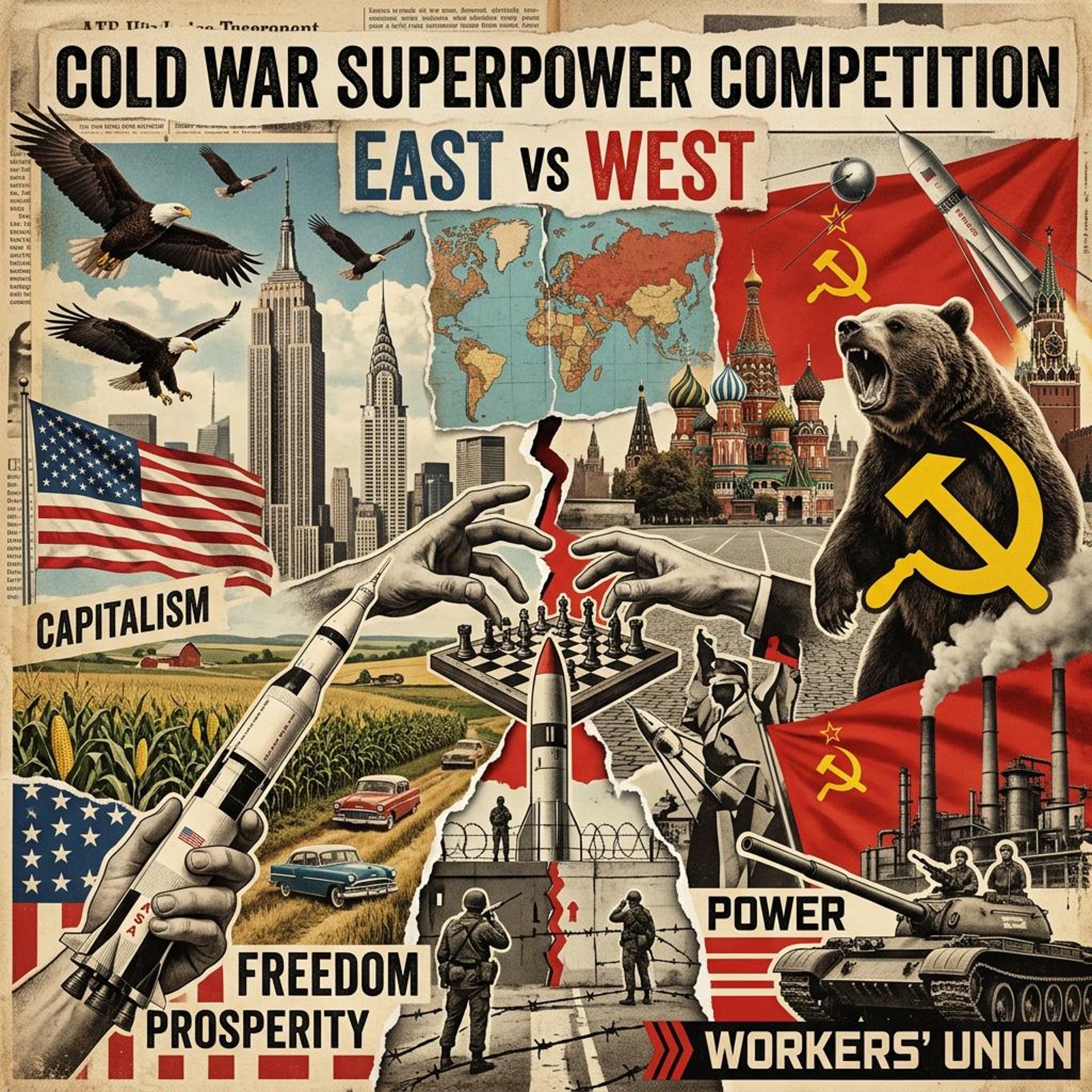
The Cold War is an extremely significant term describing a geopolitical rivalry between the USA and the USSR. It lasted for approximately 50 years, from 1947 to 1991. Let me explain the reasons for this “war” both academically and informally at the same time.
Why Did The USA And The USSR Become Rivals?
Ideological differences: While the US followed capitalism, the USSR followed communism. It’s like when you like Jacob from Twilight while your friend likes Edward, and you are constantly arguing about who is the better boyfriend.
The desire to dominate the world and control resources. It’s like when you have an iPhone 17 Pro Max while your friend has an iPhone 17, and you think you’re cooler because you have a newer device.
Lack of trust and mutual accusations: Imagine your friend spilled the tea about you to another girl, and as a result, you no longer trust them. I hope none of you have a friend like this though.
Fighting Without Fighting: The Age of Proxy Wars
After World War II, there was fear of expansion from both the US and the USSR. However, there were no “direct” military conflicts between them. Despite the risk of nuclear war, the conflict was successfully avoided. This period is also a classic example of so-called “proxy wars.”
According to the definition given by Karl Deutsch in 1964, a proxy war is an international conflict between two countries that attempt to achieve their goals through military action using the resources of a third country, under the guise of resolving an internal conflict in that third country.
The main feature of this type of war is the existence of third and dependent countries. In our case, many African, Asian, and Latin American nations became arenas of Cold War competition, receiving political, economic, or military support from either the USA or the USSR. That dependence often extended into their day-to-day life.
For the USA and the USSR, proxy wars were a way to compete for longer periods while reducing financial costs and avoiding direct conflict. Moreover, both superpowers feared nuclear war, so fighting indirectly was much safer.
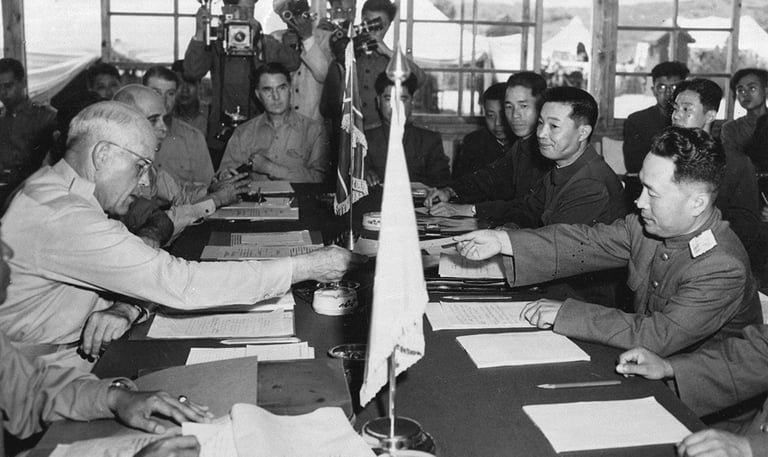
You may have heard about the proxy war in Korea. Both the USA and the USSR supported opposing sides during the Korean War, with the Soviets backing North Korea and the Americans supporting South Korea. The two superpowers did not fight directly; instead, Korean territory became the battlefield for their rivalry. The war lasted from 1950 to 1953 and ended with an armistice agreement. The Korean Peninsula remained divided along the Demilitarized Zone (DMZ), near the 38th parallel, and technically the two Koreas are still at war today.
The Nuclear Race
Speaking of nuclear war… it was one of the most serious aspects of the competition between the USSR and the US. To put it simply, the United States feared that the Soviet Union could develop its own nuclear weapons. Although they eventually did.
Both sides constantly competed to see who could build more and better nuclear weapons. After about 20 years of this arms race, they eventually agreed to limit the growth of nuclear arsenals and ban certain nuclear tests. This happened due to economic pressure and the fear of mutual destruction.
Winning Minds: Propaganda and Ideology
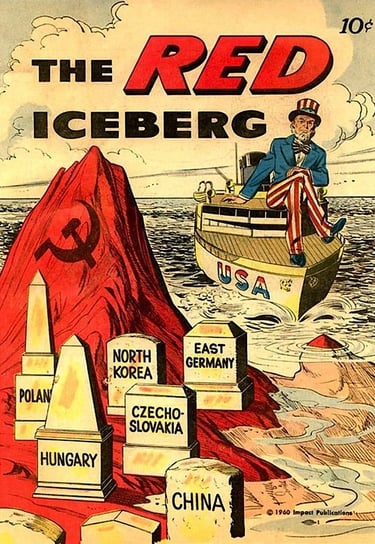
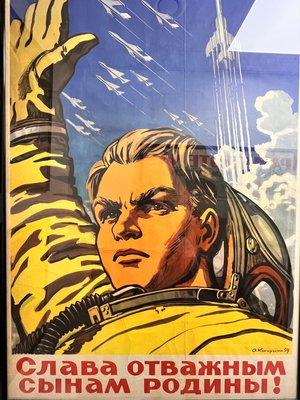
Another key aspect of this conflict was propaganda and ideology. Although people did not have social media or the internet, these tools were still central.
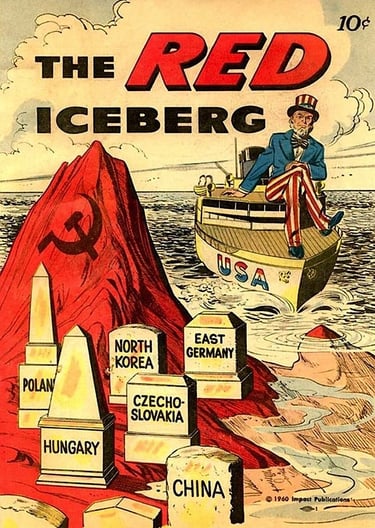
In both countries, propaganda was widely spread through cinema and media. In most cases, the enemy was portrayed as a threat to the future. The USSR depicted the “rotten West,” while the US highlighted the dangers of communist society.
In Soviet society, Americans were often portrayed as symbols of vulgarity, arrogance, and lack of intelligence, reflecting the idea of a society without “proper culture.” Both sides also used children in films and cartoons, often portraying them as uncovering secret agents and saving their country.
How Did The Cold War End?
And you may ask: “Dear writer, how did the Cold War end?” The result of the Cold War was the complete collapse of the Soviet Union and its economy. It also led to the emergence of a new Russia and a unipolar world dominated by the United States.
Many people emigrated from the USSR to Western countries, especially those attracted to the capitalist way of life. The end of the Cold War did not only mark the end of a rivalry between two countries, but also a major shift in the global order.
However, it did not lead to full stabilization of international relations. There was no clear winner of this conflict, but after its end, the world was able to breathe a sigh of relief.
Author: Veronika Mirasova
Editor & Publisher: Lucía Lobato
© 2026. Unfolding The World. All rights reserved.
Understanding the World, One Story at a Time.
About Us
Our Team
QUICK LINKS