So... What´s Capitalism?
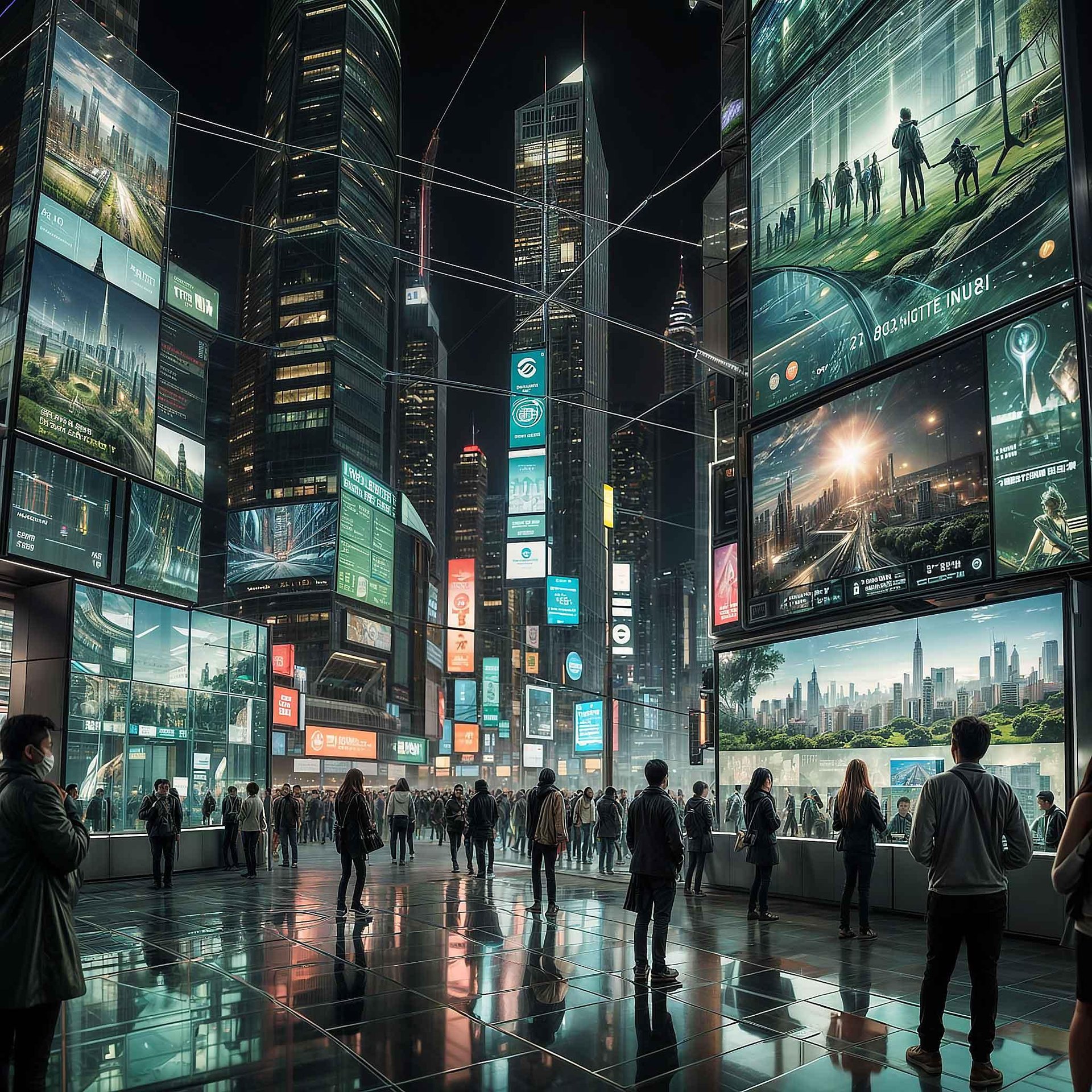
You wake up, check your phone, maybe order a coffee from an app, scroll through ads, and head to school or work. Every single part of that morning, the phone, the app, the coffee, the ads, exists within the same economic system: Capitalism.
It's one of those words that gets thrown around constantly, used to praise things, blame things and explain things, and yet most people have never really stopped to ask what it really is.
The Basic Idea: who owns stuff, and why it matters
At its core, capitalism is an economic system built on one fundamental idea: private ownership. In a capitalist system, individuals and companies, not the government, own the factors of production. That means land, labour, capital and enterprise. If you build something, you own it. If you own it, you can sell it. And if you sell it, you keep the profit.
This is paired with the idea of free markets: spaces where buyers and sellers interact with (in theory) minimal government interference, and where prices are determined by supply and demand rather than by a central authority deciding what things should cost. Together, private property and free markets form the foundation which most capitalist economies are built on.
But Why Would Anyone Work Hard If There's No Incentive Or Reward?
That's where the profit motive comes in and it's probably capitalism's most powerful engine. The logic is simple: if you can keep what you earn, you're motivated to earn more.
That means innovating, improving, competing. Companies compete for customers. Workers compete for jobs. Countries compete for trade. And all of that competition is supposed to drive efficiency, lower prices, and create better products over time. It's why your phone today is vastly more powerful than a computer from 1990 that cost ten times more. Competition pushed companies to improve. At least, that's the ideal version.
Not All Capitalism Looks The Same
Here's something that often gets missed in these kinds of conversations. Capitalism isn't one single fixed system. It comes in different forms, shaped by how much governments intervene, how markets are regulated, and how societies decide to distribute wealth. Some of the most common versions:
Liberal market capitalism (ex. the United States) emphasizes minimal regulation, free trade, and strong private sector independence.
Social market capitalism (ex. Germany or Scandinavia) combines free markets with strong social protections: public healthcare, workers' rights, regulated industries. The market exists, but so does a safety net.
State capitalism (ex. China): the government plays a heavy role in owning or directing major industries, while still operating within a market-like structure.
Crony capitalism: not really a designed system, more of a reality. When political connections and corruption determine who succeeds rather than competition, capitalism starts working for the powerful instead of everyone. These distinctions matter, because when people argue about capitalism, they're often arguing about completely different versions of it.
So What's Actually Good About It?
Capitalism's defenders argue that it has produced remarkable results. Global poverty has fallen dramatically over the past two centuries, during the same period that market economies expanded. It has driven technological innovation, raised living standards, and created systems flexible enough to adapt to change. The freedom to own, create, and profit has produced some of the most transformative inventions in human history. There's also the political argument: economic freedom and political freedom tend to go together. When governments control the economy entirely, they often control everything else too.
And What's The Problem?
But capitalism has serious criticisms and they're not easy to dismiss. The first is inequality. Free markets don't distribute wealth equally. In fact, they tend to concentrate it. The people who already own factors of production (land, labour, capital and enterprise) are in the best position to accumulate more of it. That head start can become almost impossible to overcome for those who don't have it. The second is exploitation. In its purest form, capitalism creates pressure to keep costs (including wages) as low as possible inorder to maximize profit. History is full of examples of what that looks like without regulation: child labor, unsafe conditions, poverty wages. The third is market failures, things capitalism simply doesn't handle well on its own. Healthcare, education, climate change. These areas often require collective solutions that private profit incentives alone won't produce. And then there's the environment. An economic system built on growth, consumption, and profit has a complicated relationship with planetary limits.
The Messy Reality: Most systems are mixed
Here's the thing no one usually says out loud: pure capitalism doesn't really exist anywhere. Every functioning market economy in the world also has governments, regulations, public services, and social programs. The United States has public schools, Medicare, and the Federal Reserve. Germany has strong labor laws and universal healthcare. Even countries with the freest markets set rules on what companies can and can't do. What we actually live in are mixed economies. Systems that combine market mechanisms with government intervention to varying degrees. The real debate isn't capitalism vs. no capitalism. It's about how much of each, who the system is designed to serve, and what we decide shouldn't be left to the market at all.
So… Is It Good Or Bad?
That depends entirely on who you ask, which version you're talking about, and what you value. Capitalism has lifted billions out of poverty and driven extraordinary innovation. It has also produced massive inequality, environmental damage, and systems where wealth generates more wealth for those who already have it. Most economies today aren't trying to choose between capitalism and something else. They're trying to figure out how to make it work better. How to keep the innovation and freedom while building stronger floors so that not everyone starts from the same disadvantage. That tension, between freedom and fairness, between markets and people, is one of the defining questions of our time. And now that you know what capitalism actually is, you're a little more equipped to think about it.
Author: Ana Marlene Gilles
Editor & Publisher: Lucía Lobato
© 2026. Unfolding The World. All rights reserved.
Understanding the World, One Story at a Time.
About Us
Our Team
QUICK LINKS