
Behind the Headlines: Why Politicians Never Make Just One Decision
Discover why political leaders make the decisions they do. Learn how elections, public opinion, and global strategy shape politics behind the headlines.
By Ali Gülpinar
2 min read
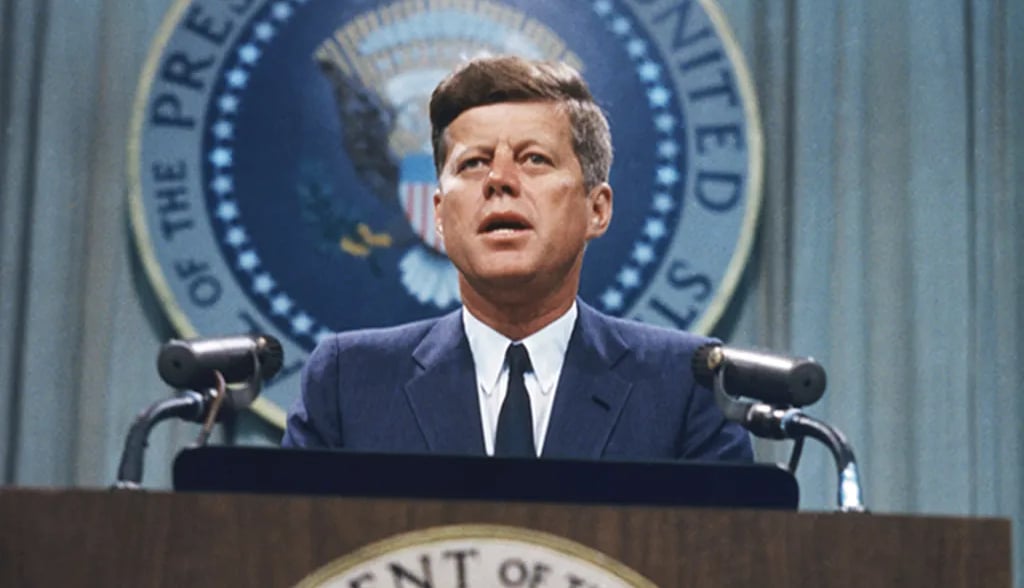
President John F. Kennedy announces the ambitious goal of landing a human on the Moon before the end of the decade, a decision that became both a scientific milestone and a strategic move in the Cold War.
Imagine you are playing chess—but against five different opponents at the same time. Now imagine that the crowd watching the game can remove you from the board if they don't like your moves. That's what being a political leader is like every single day.
When we read the news, politicians' decisions can seem confusing, surprising, or even pointless. However, there is almost always a hidden layer of strategy behind every headline. Politics is rarely just about what happens on the surface.
In this article, we'll pull back the curtain and explore what really shapes political decisions.
One of the biggest reasons political decisions are more complicated than they appear is that leaders must constantly balance two very different priorities.
On one hand, they need to satisfy their own citizens—this is known as domestic politics. On the other hand, they must manage their country's relationships with the rest of the world through international politics.
Think of it like trying to make both your family and your classmates happy with the exact same decision.
For example, a leader may want to sign an international climate agreement to strengthen their country's reputation abroad. But if that agreement harms a major industry at home, it could cost thousands of jobs, reduce public support, or even trigger protests. A decision that looks positive internationally may become politically risky domestically.
Politics Is a Constant Balancing Act
n a democracy, elections are one of the most powerful forces shaping political decisions. Because leaders depend on votes to stay in office, public opinion often acts as a giant steering wheel.
Politicians rely on polling data and public surveys to understand what people care about most at any given moment. If young voters are increasingly concerned about university costs or housing prices, you will probably see politicians proposing new policies, announcing funding, or giving speeches focused on those issues.
Does that necessarily mean they suddenly changed their beliefs? Perhaps—but it may also be a strategic decision. Addressing voters' biggest concerns can be just as important politically as solving the problem itself.
Why Elections Influence Almost Every Decision
To see how strategy influences political decisions, let's travel back to 1961. That year, U.S. President John F. Kennedy announced an ambitious goal: landing a human on the Moon before the end of the decade. At first glance, it sounded like a bold scientific challenge. In reality, it was also one of the most significant political moves of the Cold War.
The Soviet Union had already launched the first artificial satellite, Sputnik, and sent the first human into space, Yuri Gagarin. Around the world, it appeared that the USSR was leading the Space Race.
By investing heavily in the Apollo Program, Kennedy wasn't simply funding rockets and astronauts. He was strengthening America's international image, uniting citizens behind a shared national goal, and demonstrating technological superiority—all without fighting a direct military conflict.
Sometimes, a political decision is designed to send a message as much as it is meant to achieve a practical result.
The Moon Landing Was More Than a Scientific Mission
Author: Ali Gülpinar
Editor & Publisher: Lucía Lobato
© 2026. Unfolding The World. All rights reserved.
UNFOLDING THE WORLD
Because the world is complicated,
But understanding It shouldn´t be.

